
The Real Reason You Procrastinate (It’s Not Laziness)
By Nebulum
Most people explain procrastination as a lack of discipline or willpower. But that framing misses something more fundamental — and more fixable. In this episode, Zale and Grant sit down to dissect procrastination from two very different vantage points: Zale as someone who identifies strongly as a procrastinator, and Grant as someone who largely doesn’t. What emerges isn’t a lecture, but an honest, practical conversation about why we avoid the things we care about — and what we can actually do about it.
Thanks for reading! Subscribe for free to receive new posts and support my work.
What Procrastination Actually Is
The usual definition of procrastination — “delaying things you should be doing” — doesn’t get to the heart of it. A more useful way to think about it:
Procrastination happens when you focus more on the undesirable aspects of an action than the desirable ones.
Within almost every meaningful action, there’s something pleasant and something unpleasant. When your attention locks onto the goal — the outcome, the reward, the vision — you move. When your attention locks onto the friction — the effort, the discomfort, the uncertainty — you don’t.
This is why procrastination isn’t really a discipline problem. It’s a focus problem.
The Anticipation Trap
One of the clearest illustrations of this is the cold plunge.
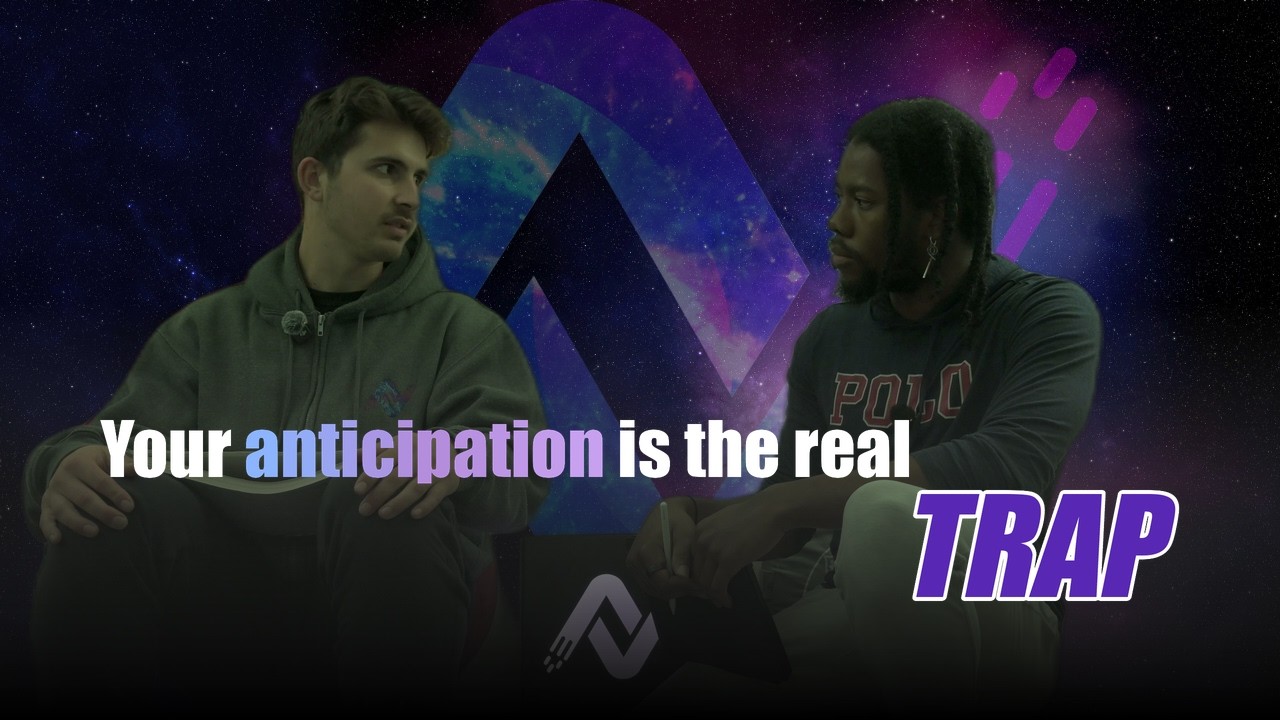
Zale and Grant both do cold plunging regularly. And almost every time, the hardest part isn’t being in the cold water — it’s the moment before getting in. The imagination of the pain becomes the barrier. You construct a vivid, unpleasant experience in your mind of something that hasn’t even started yet, and that imagined pain is enough to stop you from moving.
Once you’re in, it’s done. The mental battle is over. And most of the time, staying in is far easier than getting in.
This dynamic plays out with basically everything we procrastinate on. The anticipation is almost always worse than the thing itself. We’re not really afraid of the work — we’re afraid of the idea of the work that we’ve built up in our heads.
Procrastination Is a Habit
Here’s the thing that makes this more than just a one-off frustration: procrastination compounds.
There’s a saying — “how you do one thing is how you do everything.” When you procrastinate something today, you’re not just delaying that one task. You’re reinforcing a pattern of behavior. You’re training your brain that when the discomfort of starting appears, avoidance is the appropriate response. And the next time, that response comes more easily.
The reverse is also true. Every time you close the gap between impulse and action — every time you feel the pull to delay and move anyway — you’re training a different pattern. One that makes action feel more natural and automatic over time.
This is part of why habits like daily exercise or cold plunging are so valuable beyond their obvious physical benefits. They’re daily reps of the decision to act despite resistance.
How to Beat It: Change the Thing or Change Your Mind
There are two fundamental levers when it comes to overcoming procrastination. You can change the thing itself, or you can change how you’re thinking about it.
Changing the Thing
Lower the bar. This is probably the most underrated strategy. Instead of committing to “complete the workout,” commit to showing up. Instead of “finish the song,” commit to opening the project and sitting with it for ten minutes. Instead of “stay in the cold plunge for three minutes,” make the bar just: get in.
When the bar is lower, the anticipation shrinks with it. And once you’re there, momentum takes over. You decrease the dread and often end up doing more than you set out to do anyway — and feeling far better about it.
Make it more fun. There’s almost always a more enjoyable version of any habit than the default. The example from this episode: a garbage collector who turns his route into an athletic event — jumping off the truck, sprinting to bags, skating on the wet road. He found a way to make a mundane job feel like a sport. Whatever you find enjoyable, there’s usually a way to inject some of that into the thing you’re avoiding.
Do it with someone else. Social accountability is one of the most powerful forces there is. As Zale puts it — he’s tried many times to commit to a solo content creation schedule and it’s never stuck. The moment there were other people involved, it became consistent and more fun. If someone else is on the same path as you, leverage that. It’s not a crutch; it’s smart design.
Build in forcing functions. Deadlines, commitments, public accountability — anything that makes not doing the thing more costly. The more external structure you can architect around a habit, the less willpower you need to sustain it.
Changing Your Mind
Shift your focus. Remember — procrastination is a focus problem. You’re zoomed in on the pain of doing the thing. Practice consciously redirecting your attention to what you actually want: the outcome, the feeling of completion, the version of yourself on the other side of having done it.
Recall past satisfaction. You’ve done hard things before. You’ve started things you dreaded and come out the other side feeling great. When you’re in the grip of anticipation, deliberately recall that feeling. Use your track record against the resistance. Your anticipation isn’t neutral data — it’s often just wrong.
Make the nagging more painful. This one came from observing how Grant thinks differently about procrastination. For him, the pain of having something loom over him — unfinished, unsettled, nagging in the background — is worse than the pain of just doing the thing. So he does the thing to get rid of that feeling. The insight here is: if you struggle with procrastination, it might be worth deliberately elevating how uncomfortable you let yourself feel about not doing the thing. Make the nagging louder. Make it more real. That might be the thing that tips the scale.
Don’t spiral when you miss. If you skip a day, a week, a session — don’t let guilt compound the problem. The goal is to bounce back, not to beat yourself into submission. Guilt about procrastination often leads to more procrastination. Notice it, reset, and go again.
A Note on “Intentional Procrastination”
There’s a concept worth naming here — the idea that some procrastination isn’t really procrastination at all, but strategic scheduling.
Parkinson’s Law says that work expands to fill the time allotted to it. If you give yourself a month for something, it takes a month. If you give yourself a week, it takes a week. Some people — particularly those who know they work well under pressure — consciously schedule a task for later in the window, not out of avoidance, but because they genuinely don’t need the full time and know they’ll perform better with the focus that a tighter deadline creates.
The key distinction: with unintentional procrastination, you’re carrying the nag the whole time. Your cortisol levels aren’t zero. There’s a constant low-grade guilt, a “I should be doing this” running in the background. That’s not restful or productive — it’s just delayed suffering.
With intentional procrastination, you’ve made a deliberate decision. You trust yourself to execute, you’ve scheduled it in your mind, and you’ve genuinely let go of it until then. There’s no nag because you’re not actually behind — you’ve just started later by design.
This only works if: you know yourself well, you have a track record of delivering, and the stakes of not finishing aren’t catastrophic. It’s not a beginner’s tool. But it’s worth knowing it exists.
Systems: Making the Choice Disappear
Ultimately, the most powerful solution to procrastination isn’t a better motivational trick — it’s removing the decision entirely.
When something is part of a real system — a scheduled time, a committed group, a non-negotiable routine — there’s no moment where you have to decide whether to do it. It just happens. The procrastination can’t get a foothold because there’s no choice to exploit.
A system is something that operates independently of your mood, your energy, your inspiration on any given day. It multiplies your input. And building enough systems around your goals means that even on the hard days, the default behavior is showing up.
The Core Insight
At the root of all of this is a simple idea from motivation science:
Procrastination is always about which pain you find worse — the pain of doing the thing, or the pain of not doing it.
For people who naturally don’t procrastinate, the nagging, the incompleteness, the delay of their goals — that’s more painful than any friction in the task itself. So they just do it, to get relief.
For people who do procrastinate, the imagined discomfort of the task looms larger than the discomfort of avoidance. And the remedy is to rebalance that equation — either by making the task feel smaller, or by making the cost of avoidance feel bigger.
Your Takeaway Exercise
Here’s something to sit with after reading this:
Think about one thing you keep procrastinating — something you genuinely want to do or want to be consistent with, but keep putting off.
Now map out all the pains involved:
What discomfort are you trying to avoid by not doing it?
What’s the cost of not doing it — the nagging, the stress, the delay of something you care about?
See if you can make the second list more vivid. More real. More felt. Let it actually bother you in the way it deserves to.
Then ask yourself: what’s the smallest possible version of this task you could start with today?
That’s your entry point.
The Nebulum Podcast is about fulfillment — how to live with more freedom, meaning, and connection. New episodes dropping regularly. Find us on YouTube and wherever you listen to podcasts.
Thanks for reading! Subscribe for free to receive new posts and support my work.
 ▶
▶Listen to the episode
The Real Reason You Procrastinate (It's Not Laziness)
The Nebulum Podcast · EP 19 · 40 min