How to Navigate the Emotional Highs and Lows Without Losing Your Way
By Nebulum

The Nebulum Podcast — Episode 16
We all have those stretches where everything feels aligned — momentum is building, the path feels clear, and you’re genuinely excited to wake up. And then, almost predictably, the next day arrives and none of that is there.
That’s exactly what happened this week. After a genuinely great day, the following morning brought something that felt like the opposite: ungrounded, low, adrift. The best word for it was existential dread.
It’s a feeling a lot of us know. And while it can be uncomfortable — especially when we’re in the middle of trying to build something meaningful — it doesn’t have to knock us off course. In fact, if we know how to work with it rather than against it, it can actually move us forward.
This episode is our attempt to offer some tools and frameworks for doing exactly that.
The Problem with Resisting Hard Emotions
Here’s what tends to happen when a difficult emotion shows up: we decide it shouldn’t be there.
I shouldn’t be feeling this way. I was doing so well. What’s wrong with me?
That judgment — the resistance — is where things start to unravel. Because when we resist the feeling, we don’t just have the original emotion to deal with anymore. Now we’re also dealing with guilt about having it, frustration at ourselves for being off our game, and shame about not being further along. We feel bad about feeling bad, and then bad about feeling bad about feeling bad.
That’s how a spiral starts.
The antidote isn’t to power through and ignore it. It’s to do something deceptively simple: accept it.
Phase One: Acceptance
Accepting how you feel doesn’t mean you want to feel that way, or that you’re okay with staying there. It just means you stop fighting the reality of where you are in this moment.
We all go through highs and lows. We get sad, annoyed, existentially lost, unmotivated. That’s not a failure — it’s the full spectrum of the human experience. And every part of that spectrum, including sadness, has value. It’s what allows us to relate to other people. You can’t have the front of a coin without the back.
When we stop telling ourselves an emotion shouldn’t exist, we stop creating a dam in the river. We allow the flow to continue. Acceptance is what makes the next step possible.
Phase Two: Inspection — What Is This Actually Telling You?
Once you’ve accepted what you’re feeling, you can start to look at it like a detective.
Emotions are signals. They’re pointing at something — a need that’s not being met, an area of life that lacks clarity, an insecurity that hasn’t been examined, a direction that needs adjusting. The question is: what is this one pointing at?
Some useful questions to sit with:
Is there tension somewhere in my body? Where?
Is this coming from worry, fear, or a lack of direction?
Is there something I’m not being honest with myself about?
Is this feeling familiar — have I been here before?
One practical example: when someone says or does something that hurts you, rather than focusing on them, look inward. What insecurity did that hit? When you can identify it and accept it — okay, I have this insecurity — something shifts. It becomes something you can understand, navigate, and work on, rather than something that just pulls you under.
This kind of inspection is deeply valuable. The more you put into it, the more you get out of it. If you brush it under the rug and wait for it to pass, it’ll come back. But if you examine it with curiosity, you learn something real — about yourself, about what you need, about where you’re being called to grow.
The Balance: Reflect Without Ruminating
To be clear, this isn’t an invitation to lie in bed all day analyzing your feelings. That’s not the goal.
The goal is to hold both things at the same time: continue doing your life — your work, your craft, your commitments — while keeping part of your awareness turned inward to process what’s happening. You don’t have to stop everything. You just stop repressing.
Most of us already have natural moments of reflection built into our days — the shower, the commute, a walk, the quiet before bed. Those moments tend to get filled with phones and scrolling, which is a subtle way of avoiding the very reflection that could help us most. Let those moments be empty. Boredom is underrated. It’s often where the real processing happens.
Building habits that give you intentional reflection time — a morning walk, five minutes of quiet with a journal, a cognitive rest break — can make a significant difference over time.
Doing It Anyway — With the Feeling, Not Despite It
There’s something we’ve talked about in previous episodes: doing the work anyway. Showing up to your craft, your practice, your path — even when it’s hard.
But this isn’t about ignoring how you feel. It’s about doing the thing while you’re feeling it.
Think about it this way: if you only ever work on something when you’re in a great mood, you only know that one version of yourself in relation to that thing. But if you bring your sadness to it, your frustration, your uncertainty — now you’re building a real, multi-dimensional relationship with your work.
The same is true for relationships with people. A friendship that’s only ever joyful isn’t as deep as one that’s moved through pain together. Your relationship with your craft, your path, your purpose — it deserves that same depth.
You might even find that certain emotional states unlock something different in your work. Some of the most resonant creative work comes from difficult emotional territory. The key isn’t to manufacture those states, but not to run from them either.
The Woo-Woo Take: Emotions as Visitors
Here’s a different lens — one that might resonate depending on how you think about these things.
The book Care of the Soul explores the idea that different emotions carry something like a soul, a spirit, a personality of their own. Rather than seeing sadness as a malfunction happening inside you, you can see it as a visitor arriving — something that has come through, not from you.
Most human cultures throughout history have thought about it this way. In animist and polytheist traditions, emotions were understood as different gods or spirits — forces outside of us that move through us. Anger was the god of war arriving. Grief had its own name, its own presence.
That way of thinking does something interesting: it removes the personal blame. You didn’t decide to feel this way. It came. And if it came, it can also leave — especially if you welcome it in, listen to what it needs, and let it move through rather than bar the door against it.
This connects to the idea in Rumi’s “The Guest House” poem: every emotion that arrives at your door is a guest. Welcome them all. When you fight to keep them out, they batter the door down. When you let them in with curiosity and even gratitude, they move through on their own time.
Whether or not you relate to the spiritual framing, the underlying principle holds: you’ll have an easier time with your emotions if you approach them with openness rather than resistance.
The Four-Part Resilience Framework
Here’s a practical model worth thinking about — one that breaks resilience down into four distinct, trainable skills.
1. Tolerance How much adversity can you experience before your behavior changes? This is your threshold. A person with high tolerance can feel a lot — grief, fear, frustration — without it altering their course. Importantly, this isn’t numbness. You can have deep emotional sensitivity and high tolerance. The depth of feeling increases; the control that feeling has over you decreases.
2. Fortitude When adversity does knock you off your path, how far off does it take you? How drastically does your behavior shift? High fortitude means the deviation is small — you feel the impact, but you don’t swing wildly. You don’t do things you’ll regret when the emotion passes. The test isn’t whether you feel the emotion — it’s whether the emotion ends up making decisions for you.
3. Resilience (Return to Baseline) How quickly do you find your way back? Once the behavior has shifted, how long does it stay that way? This doesn’t mean rushing your recovery — some things legitimately take time. It’s more about whether you’re oriented back toward your path, continuing to move in that direction, even while still processing.
4. Adaptability This is the most important one. When the dust settles and you return to baseline — where is that baseline relative to where it was? Did the adversity make you better or worse? Did you extract the value from it? Did you learn something that makes you more capable, more insightful, more equipped for the next time?
If you have high adaptability, hard things become fuel. They leave you further along the path you wanted to walk. If you have low adaptability, hard things leave you further from it. The goal, over time, is to build adaptability — to become someone who genuinely grows from adversity rather than just surviving it.
Self-Mastery Is Not a Grind Mindset
It’s worth naming what this framework isn’t.
It’s not about becoming a robot. It’s not about suppressing emotion or pushing through pain to optimize for output. The goal isn’t to feel less — it’s to be more free.
Self-mastery, in this context, means being affected by emotions without being controlled by them. It means you can feel the full range of what it means to be human, and still walk in the direction you’ve chosen. That feels different from the grinding-through-pain productivity culture. It’s softer, more honest, more sustainable.
And the measure of “better” or “worse” isn’t defined by anyone else. It’s defined by you — by the gap between who you are right now and the highest version of yourself you can imagine. Adversity, navigated well, closes that gap.
Reflection Prompts to Take With You
As you go about your day, here are a few questions worth sitting with:
1. Right now, take note of your emotional state. Is it affecting your behavior? Your energy? Your focus? Did you even know it was there before you paused to check?
2. Think of a recent moment when someone said or did something that hurt you. Can you find the insecurity that it touched? What does that insecurity tell you about yourself — and what might it be inviting you to work on?
3. Sit with the four-part framework — Tolerance, Fortitude, Resilience, Adaptability. Which of these feels most underdeveloped in you right now? What would it look like to strengthen it?
A Closing Thought
Hard emotions are not the enemy of a fulfilling life. They’re part of it. They’re data, messengers, teachers. The path of fulfillment isn’t a path where you never feel ungrounded or sad or afraid — it’s a path where you’ve learned to walk with those feelings, listen to them, and let them make you wiser.
The goal isn’t to avoid being knocked off. It’s to know how to find your footing again — and to come back each time standing a little taller than before.
The Nebulum Podcast is hosted by Zale and Grant. New episodes weekly. Subscribe, share, and if this episode moved something in you — pass it along to someone who might need it.
 ▶
▶Listen to the episode
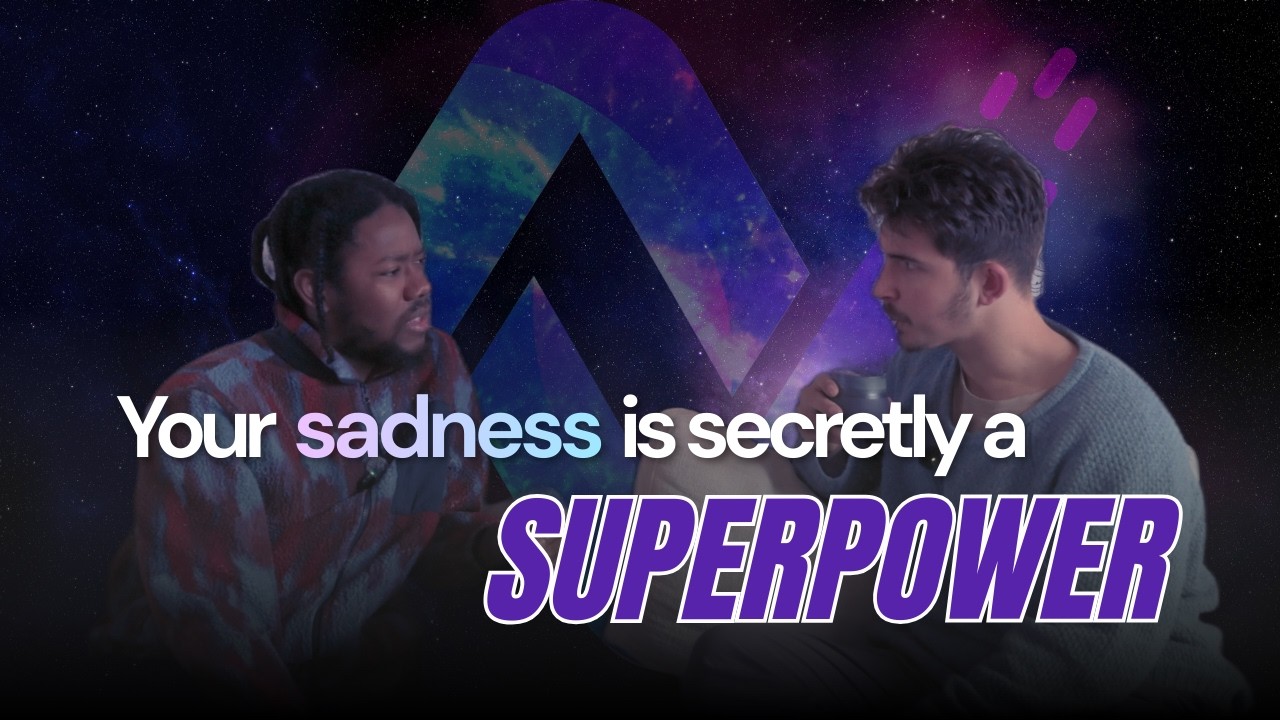
You Need THIS to Navigate Difficult Times
The Nebulum Podcast · EP 16 · 49 min