
Are You Lying to Yourself About What You Really Want?
By Nebulum

A conversation on resonance, self-deception, and the bravery to follow your path
There’s a particular kind of tension that arises when you already know the answer but aren’t ready to admit it to yourself. It’s the feeling of standing at a crossroads, intellectually aware of which direction calls to you, while simultaneously constructing elaborate reasons why you shouldn’t take that path.
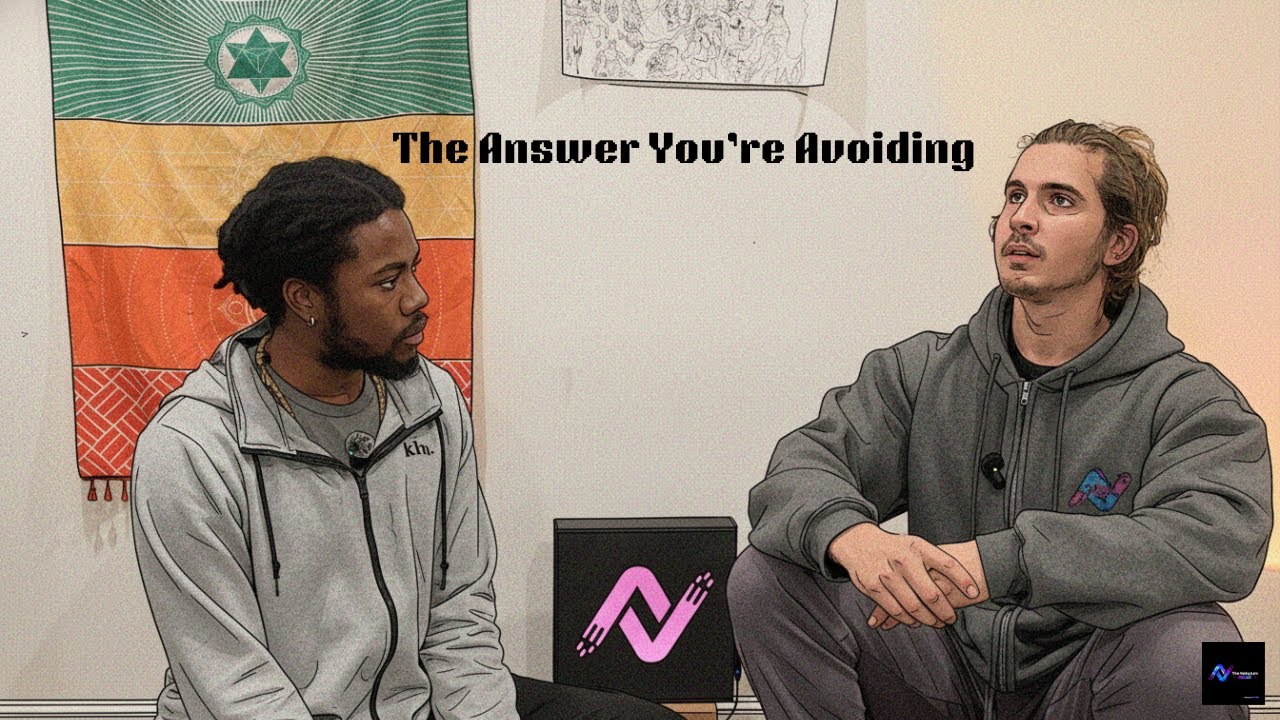
In this episode of The Nebulum Podcast, we dive into one of the most challenging aspects of pursuing fulfillment: recognizing when you truly resonate with your path, and finding the courage to admit what you already know deep inside.
The Disconnect Between Mind and Resonance
The conversation begins with a simple but profound observation: sometimes, in our minds, something seems really good. However, the doing may not resonate. This disconnect can manifest in countless ways—a career path that looks perfect on paper but drains your energy, a relationship that checks all the boxes but feels hollow, a creative pursuit that excites you in theory but never quite materializes.
To achieve great things, to achieve mastery in something, we need to be totally in it. Totally committed. Totally interested. But how do we figure out whether this thing is what we want to be doing? Whether this is the path for us?
The challenge becomes even more complex when we consider the sheer volume of signals we receive: external expectations, internal desires, practical considerations, emotional fluctuations, past conditioning, and future anxieties all compete for our attention. Sometimes we already know the answer, and we don’t want to admit it to ourselves. And that, as it turns out, might be the most important thing to address.
The Power of Self-Deception
Self-deception isn’t always a dramatic betrayal of our true selves. More often, it’s subtle—a quiet voice we learn to ignore, a feeling we explain away, a truth we acknowledge intellectually but never allow to fully land in our hearts.
This point about not wanting to admit things to ourselves is probably the highest leverage point when discussing how to recognize fulfillment. Because more often than not, we have signals that we stifle. Eighty percent of the work in finding fulfillment is probably learning not to stifle the signals we’re getting.
But why do we stifle these signals?
What We’re Taught to Fear
We stifle the signals we’re getting because of what we’re taught to fear. These fears take many forms:
Fear of disappointment: We don’t want to disappoint someone important to us
Fear of the unrealistic: We’ve been told certain paths are unrealistic, so we preemptively give up
Fear of instability: We fear the unknown and fear giving up stability, so we don’t want to admit that we want something different
Conflicting values: One value is comfort, another is a yearning for a more fulfilled life
These fears create a fascinating paradox: part of us feels like we already know the answer and just don’t want to admit it. Another part genuinely isn’t sure and experiences doubt in the decisions we make, based on different emotions we might be feeling in different moments.
So which version of ourselves do we trust? The person in this situation where we feel pulled toward one decision, or the person in a different emotional state who has a different perspective? This emotional fluctuation makes the waters muddy and the decision harder.
The Role of Faith and Trust
The solution isn’t to eliminate emotion from the equation—that’s impossible and undesirable. Instead, it requires calling on a different piece of ourselves to make the decision we know we feel deep inside and forcing ourselves to attempt to stick to it, even when it gets really hard not to.
This is where faith becomes essential. Not faith in a religious sense necessarily, but faith as trust—trust in your inner calling.
When stability is threatened and we’re uncertain and afraid, we might just run back to what’s familiar. Faith and bravery go hand in hand. We need faith that what’s on the other side of this decision is calling us, even when we can’t see it clearly.
For intuitive people, that calling is how they operate. It’s the thing they use to choose where they want to go. But trusting that intuition requires courage, especially when it conflicts with external markers of success or the expectations of others.
How to Know if You’ve Made the Right Decision
One practical approach: gauge whether the decision you make is the right one by how it feels after. This isn’t about chasing good feelings or avoiding discomfort—it’s about paying attention to whether you feel more aligned or more fractured, more energized or more drained, more yourself or more like you’re playing a role.
Being honest with yourself is important, even though there are things we want to want in a way. However, intuitively, internally, we don’t truly want that. So rather than forcing ourselves to want what we think we should want, we can focus our energy on something we actually do want—even if that thing might not make as much money, or have a very paved path, or be something that’s common or understood by others.
The Identity Question: Who Do You Want to Be?
One of the most powerful reframes in this conversation: thinking about identity. Not just what you want to do, but who you want to be.
Do you want to be someone who takes risks? Do you want to be brave? Do you want to be someone who can handle difficult scenarios? If the answer is yes, then the path forward becomes clearer—not easier, but clearer.
The identity you want can serve as a north star. When faced with a difficult decision, ask: What would the person I want to become do in this situation? Let me walk the walk. Let me practice.
This isn’t about toxic positivity or forcing yourself into an unrealistic mold. It’s about recognizing that you’re already becoming someone through your choices, whether consciously or unconsciously. You might as well participate in that process intentionally.
The Worst-Case Scenario Technique
One particularly effective strategy for working through fear: thinking through the worst-case scenario. Not in a catastrophizing way, but in a realistic, demystifying way.
What is the actual worst thing that could happen? And critically: can you deal with that?
This technique proved transformative for overcoming communication anxiety—a fear of saying things, even mundane things, because of being afraid of interrupting someone’s thoughts. By thinking through the worst-case scenario (they were thinking about something, and now they’re not), it became clear that the fear was largely irrational. The worst case wasn’t actually that bad. By putting yourself in the worst case mentally, you survive—in your head. And that makes it easier to push past the fear in reality.
This isn’t about eliminating fear entirely. Fear is information. But we can learn to distinguish between fears that protect us and fears that constrain us unnecessarily.
Demystifying the Unknown
Much of what holds us back is the mysteriousness of the unknown path. We know what staying looks like; we have no idea what leaving looks like. This asymmetry of information creates paralysis.
The antidote: demystification. Find people who’ve been through it, or been through a version of it. Everyone’s experience is different, but there are overlaps. These people can be:
Someone you know personally
Authors of books
Creators of videos or podcasts
Members of online communities (even the deep, dark corners of the internet—carefully)
Hearing how others navigated similar territory doesn’t eliminate your fear, but it makes the unknown less mystifying. It gives you data points. It helps you see that people have walked this path before and survived—even thrived.
What Do You Fear More?
Once you’ve demystified the path ahead as much as possible, the final push comes from a different question: What do you fear more?
What’s the worst-case scenario of not making this decision? What’s the worst-case scenario of doing what you’re currently doing forever? What’s the worst-case scenario of waiting so long that you hit a breaking point, when you could have made the decision way earlier?
Who are you? Are you brave? Do you want to be brave? What’s the worst-case scenario of being brave? What’s the worst-case scenario of not being brave?
Thinking through what you fear more can provide the clarity that tips the scales. Because often, we’re so focused on the fear of change that we forget to weigh the fear of stagnation.
The Cost of Halfway Commitment
Perhaps one of the most important insights from this conversation: the problem isn’t just about choosing the wrong path—it’s about committing to a path halfway.
When we’re not fully committed, when we’re doing something with one foot out the door, we never give it a real chance. We never build the skills, connections, and momentum needed for breakthrough. And we certainly never achieve mastery.
If you’re going to be on a path, be on it. If you’re not on it, get off it. But the middle ground—the zone of perpetual ambivalence—is where fulfillment goes to die.
Reflective Prompts
If this conversation resonated with you, here are two practices to take with you:
Prompt 1: Think about something you’re not admitting to yourself that you know, deep down, you want to do or stop doing. Think through the worst case of just admitting it—not necessarily doing it. Try to convince yourself that admitting it doesn’t mean you’re going to do it. Then see if you can admit it to yourself more consciously. Once you can acknowledge it, you can start to understand it more clearly.
Prompt 2: Imagine the version of you that admits the thing you may not want to admit. Imagine who that version of you becomes. Also imagine the version of you who doesn’t admit this thing. While doing this, try not to judge the versions of you. This exercise helps you get a sense of what you fear more and which version you don’t want to become. Just do a little imagination on that and see what happens.
Final Thoughts
The path to fulfillment isn’t about having all the answers. It’s about being brave enough to listen to the signals you’re already receiving, honest enough to admit what you already know, and faithful enough to take the next step even when you can’t see the entire staircase.
You already know more than you’re admitting. The question isn’t whether you have the information—it’s whether you have the courage to act on it.
And if you’re reading this, wondering if this conversation was meant for you: it probably was. The fact that you’re still here, still seeking, still questioning—that’s not a sign of confusion. It’s a sign of readiness.
The only question remaining: What are you waiting for?
The Nebulum Podcast explores fulfillment through stories, advice, philosophies, and honest conversation. If you found this valuable, we’d love to hear your thoughts in the comments.
 ▶
▶Listen to the episode
Are You Lying to Yourself About What You Really Want?
The Nebulum Podcast · EP 13 · 60 min